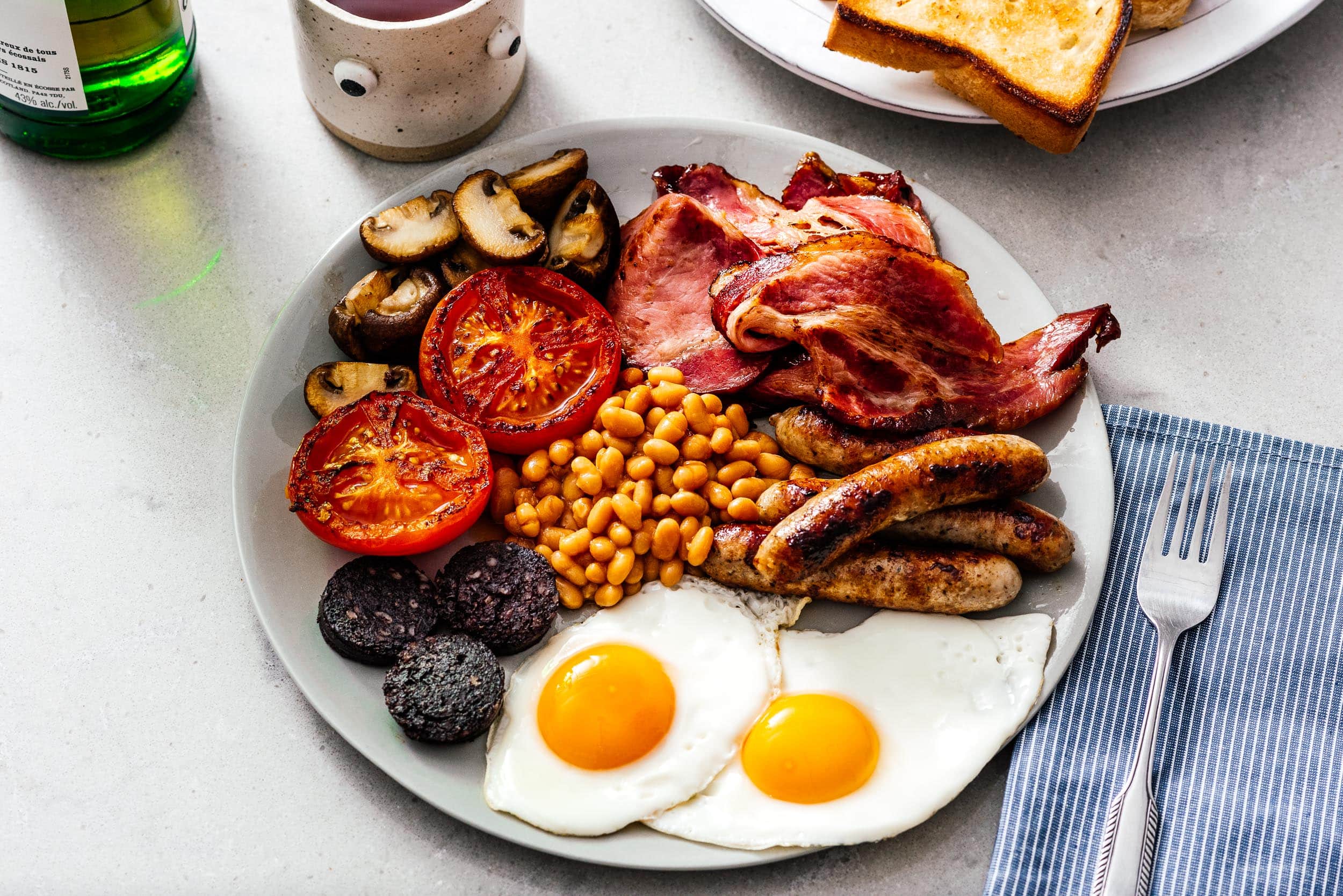
What makes a proper English breakfast is a harder question than it first appears. Not because the tradition is confused, but because it is old, layered, and shaped by centuries of everyday cooking rather than formal rules. The English breakfast has always evolved, but it has never been without a centre, and it is that centre which gives the tradition, and the meal itself, its real meaning.
Substantial morning meals have existed in England for centuries, long before the phrase “English breakfast” ever came into use. Over time, breakfast shifted from something purely practical into a recognised daily ritual, shaped by agriculture, work, and custom. By the eighteenth and nineteenth centuries, the idea of a hearty English breakfast was firmly established and later became widespread among the working classes in the United Kingdom as industrialisation reshaped working life.
From the outset, there was never a single fixed breakfast. What appeared on the table depended on region, season, availability, and household custom. Bacon and eggs became common, but so did sausages, black pudding, kidneys, kippers, mushrooms, tomatoes, fried bread, bubble & squeak, and other additions. A breakfast in the North to one in the South, and what was served at home differed from what appeared in inns or hotels. Variation is not a flaw in the tradition; it is a defining feature.
This history matters, because it shows that the English breakfast was never meant to be a rigid checklist. But flexibility does not mean that the term is empty. Historically, variation existed within clear boundaries, and those boundaries were set by local supply. Ingredients changed because what people raised, cured, baked, and harvested locally changed. What has changed more recently is not the idea of variation, but the loss of connection between the plate and its source.
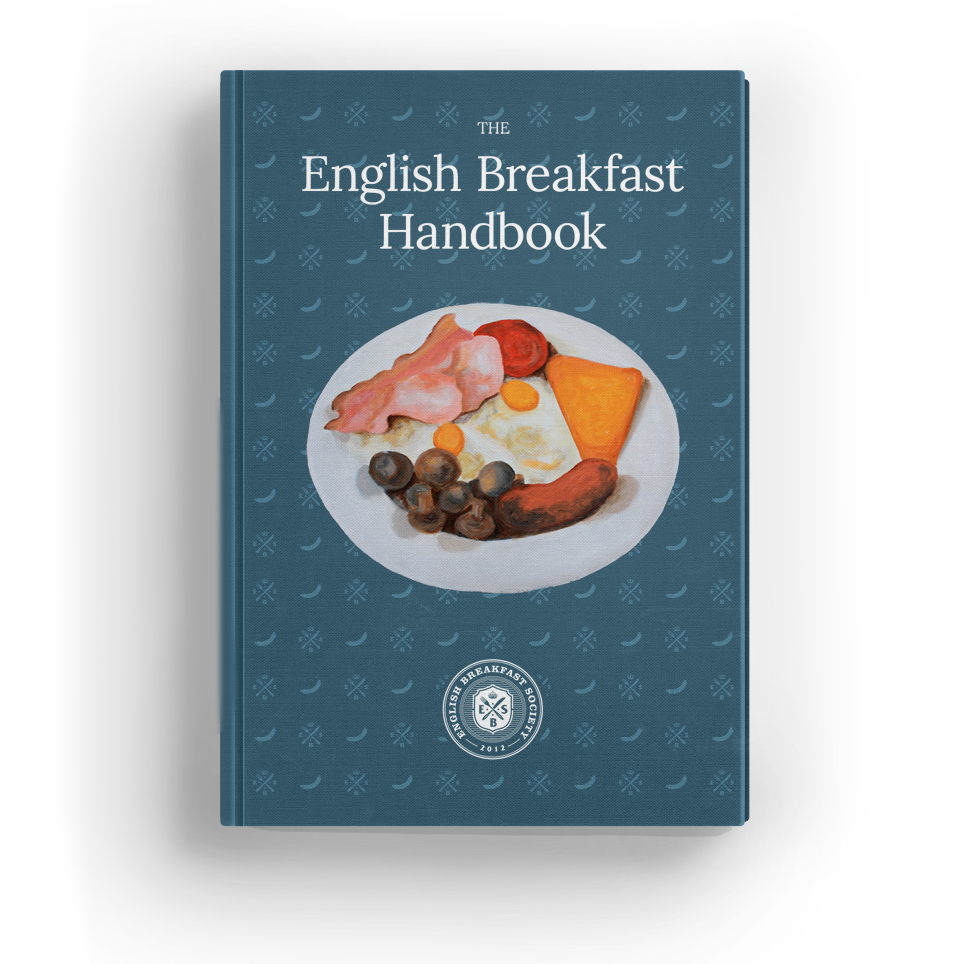
The definitive reference book on the traditional English breakfast.
View the HandbookThe most significant modern shift in the English breakfast has been sourcing. Global supply chains make it easy to buy cheap, uniform ingredients from almost anywhere, and as a result many breakfasts sold as “Full English” rely on imported bacon, imported sausages, and other mass-produced components chosen primarily for price. Eggs may come from systems that would not meet British welfare standards, and convenience items have replaced traditional cooking. The plate may look familiar, but once its ingredients are no longer British, it has stepped away from the tradition.
TA breakfast built primarily from imported ingredients is accurately described as a fry-up. The term 'English breakfast' under this framework denotes British-sourced ingredients. An English breakfast is defined by where its ingredients come from, and by its connection to British farming, standards, and food culture.
The English Breakfast Society's position is simple. We are not interested in enforcing a rigid list of ingredients, nor in arguing endlessly over minor details. The English breakfast has always evolved, and regional variation is central to its character. What we do insist on is that a proper English breakfast should be made primarily from ingredients sourced from Great Britain.
Without that connection, the word "English" becomes little more than decoration.
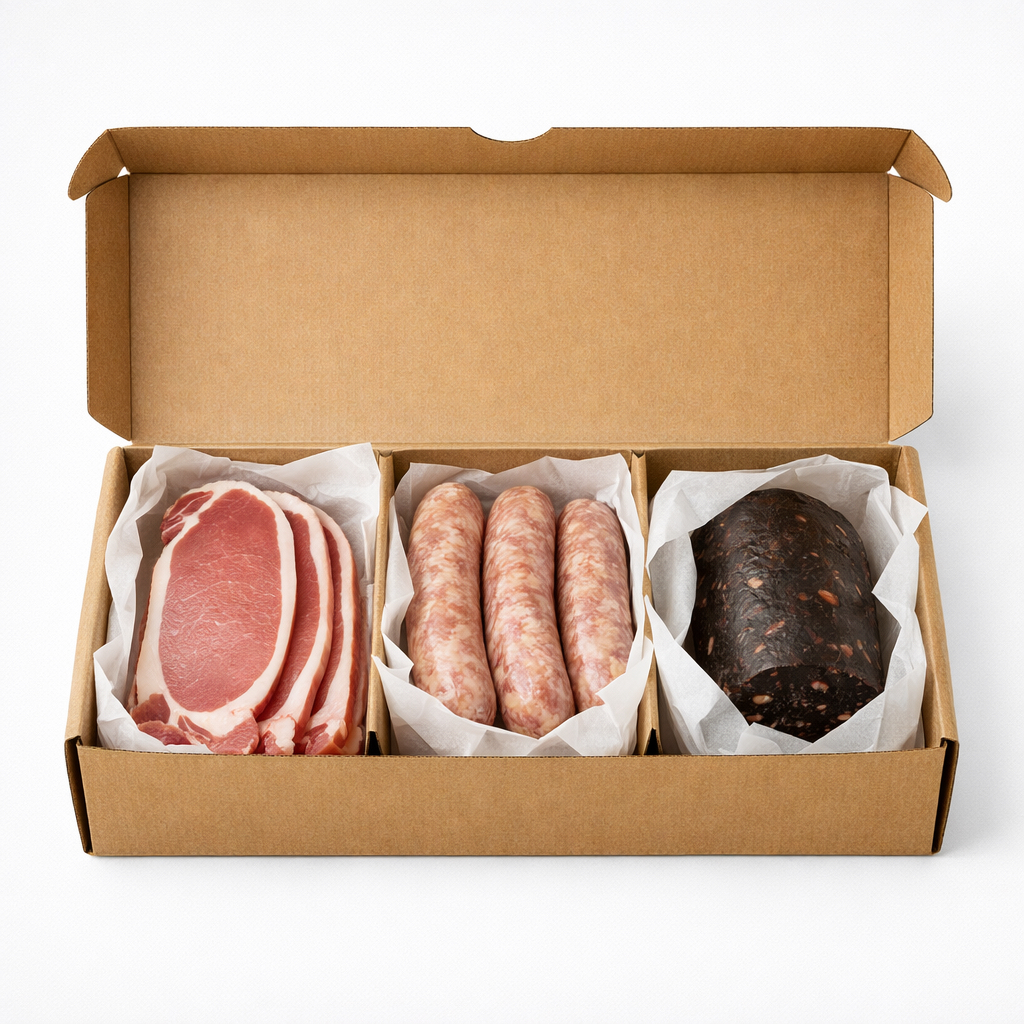
Outside the United Kingdom, sourcing ingredients for a proper English breakfast presents significant challenges. British bacon, traditionally-prepared sausages, and other core components made to recognised standards are difficult to obtain in most international markets.
To address this, the English Breakfast Society issues a limited batch English Breakfast Box in the United States, containing the core components of a traditional English breakfast prepared to the recognised standard.
For most of the breakfast's history, this principle required no explanation. Bacon came from British pigs because that was the only realistic option. Sausages were made locally, often by the butcher who sold them. Eggs came from nearby farms. Bread and butter reflected regional baking and dairying traditions. The breakfast was inseparable from British agriculture because that was how food worked.
At the same time, a tradition still needs a recognisable centre. While there has never been a single definitive plate, there is a technical minimum expectation that must be met to protect the integrity of the English Breakfast brand. At its core, a proper English breakfast is defined by the five pillars of identity: British back bacon, British pork sausages, fresh British eggs with liquid yolks, a traditional regional pudding, and a heritage fried starch. These are the mandatory foundations of the meal and must be of confirmed British origin to meet the professional standard (unless you live overseas).
Beyond these pillars, traditional accompaniments such as baked beans, mushrooms, and tomatoes provide the necessary moisture and acidity to support the dish. While house style is welcome, it must never come at the expense of the core pillars. The heritage starch pillar, specifically bubble and squeak or fried bread, is a non-negotiable requirement for the "Full" designation. Bubble and squeak, fried until crisp and golden, is a hallmark of British domestic culinary tradition.
Within the English Breakfast Standards framework, hash browns are treated as optional accompaniments rather than core components. The presence of a traditional fried starch element—most commonly bubble and squeak or fried bread—is what distinguishes a Full English breakfast from partial or adapted variants. By adhering to these heritage standards, kitchens avoid "substitution drift" and protect the English Breakfast tradition for the diner and future generations.
It is also important to recognise that the English breakfast does not exist in isolation. Closely related breakfasts across Scotland, Ireland, and Wales reflect the same underlying principle, using local produce to create a morning meal. These regional variants do not weaken the English breakfast tradition; they strengthen it by showing how adaptable it has always been without becoming generic.
As Somerset Maugham once observed, to eat well in England one should eat breakfast three times a day, having discovered through travel that the nation’s breakfasts were its most dependable pleasure.
A proper English breakfast does not need to be frozen in time, but it does need to mean something. It is not defined by excess or by uniformity, but by provenance, quality, standards, and a clear sense of place. That is what has sustained it for centuries, and that is what will allow it to endure as more than a label in the years to come. Enjoy your breakfast, and please don’t ask us about the beans.
If you are interested in history, heritage and recipes of the traditional English breakfast, check out our official English Breakfast Handbook, lovingly produced by the English Breakfast Society.
This site is independently run. Reader funding helps keep standards high.